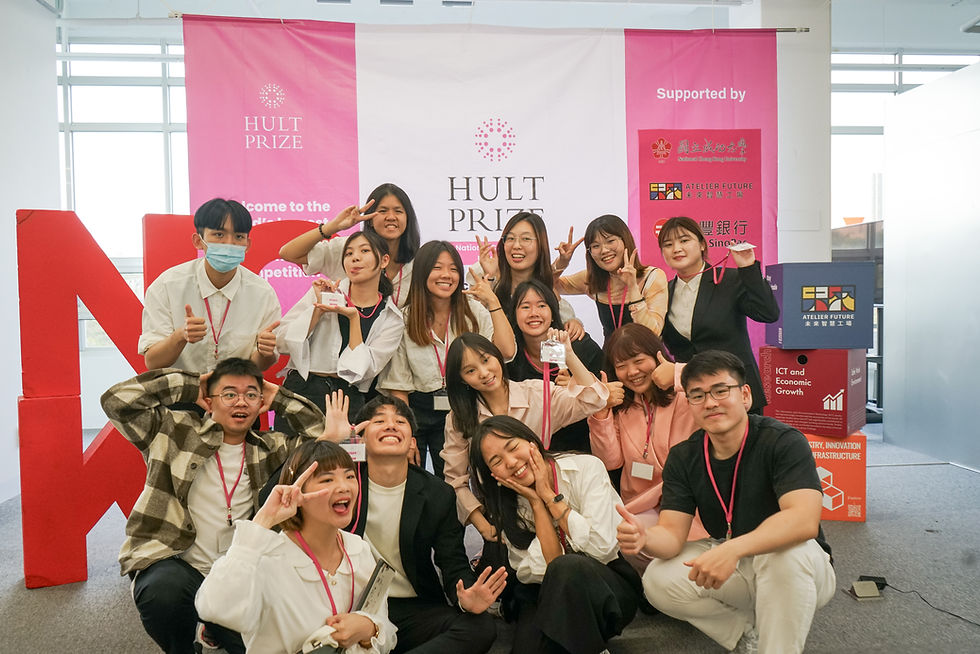
Two Days, One Ripple
- Atelier Future

- Aug 1, 2025
- 6 min read
Updated: Aug 6, 2025
Text and Pictures by Hult Prize 2025 Taiwan National Competition
How do you build a space where students feel seen, empowered, and ready to change the world – in just two days?

That was the challenge we took on as organizers of the first official Hult Prize Taiwan National Competition, held on April 26–27 at National Cheng Kung University (NCKU). The event brought together student teams from across Taiwan to pitch bold ideas tackling global challenges through entrepreneurship.
As part of the world’s largest social enterprise competition, in partnership with the United Nations and Hult International Business School, the Hult Prize Taiwan National Competition selected one team to represent Taiwan on the global stage, with the chance to join the Hult Prize Global Accelerator and compete for US$1 million in seed funding.
A Catalyst for Purpose
As organizers, we envisioned the Hult Prize Taiwan not just as a competition, but as a catalyst to empower the next generation of social entrepreneurs committed to solving global sustainability issues. Starting in January, the core team only had 3.5 months to prepare for the 2 days event. Unlike the OnCampus Program where the organizers need to find competitors, our goal is beyond logistics.

We aim to create a ripple, focused on the emotional architecture of the event, ensuring participants not only pitched their ideas but felt seen, supported, and empowered throughout the experience. In just two days, we hoped to foster connection, confidence, and purpose that could last far beyond the event.
What It Took to Pull This Off
Delivering that vision required more than just task lists and deadlines. With only 3.5 months to prepare and most coordination happening remotely, we faced a compressed timeline, different communication styles, and the challenge of building cohesion across teams and cities. Every decision, from program curation to production details, demanded thoughtful planning and trust.
But beneath the polished outcomes were long nights and personal sacrifices. With everyone juggling different majors and academic schedules, the only time we could reliably meet was after 9 p.m., often ending close to midnight. The week before the event, preparations intensified: the opening ceremony team rehearsed until 1 a.m., the production and logistics teams went back and forth to the venue to finalize stage layouts, the judges liaison team shuttled between the venue and train station to ensure every judge arrived safely, the event operations team revised the rundown repeatedly when plans shifted, and the sponsorship team worked to ensure every stakeholder request was met. Meanwhile, the core team continually reassigned responsibilities, matching tasks to people’s strengths to ensure no detail was overlooked.


Image 3-5. Meetings: anywhere, anytime.
Many members had little to no prior experience with the Hult Prize or organizing events of this scale. Each meeting became both a decision-making and a learning space, where we navigated how to lead under pressure, communicate with external stakeholders, and deliver national-level standards while supporting one another’s growth. We were also fortunate to have the Atelier Future team mentoring us along the way, who gave us the freedom to design the event as we envisioned it, while providing backup and guidance whenever challenges arose or decisions risked going off track.
Language barriers added another layer of complexity. Some teammates were more fluent in English, others in Chinese, and yet, we chose to move forward together. We prioritized clarity, patience, and mutual learning, knowing that inclusion and agility weren’t trade-offs, but parallel goals. Communication styles varied across cultures and personalities - from direct to deferential, from over-questioning to under-explaining - but through it all, we practiced listening, empathy, and trust.
“Even when things felt chaotic internally, we had to stay calm and clear in front of stakeholders. That balance between professionalism and flexibility was a lesson in itself.” — Agnes, Head of Production (Industrial Design 114)
We were fortunate to have the generous support of Bank SinoPac, whose trust and full sponsorship enabled us to focus not on fundraising, but on intentionally shaping the experience. Rather than asking what we could afford, we asked what would truly matter – and how we could translate that into the design of the program. Their belief in our work gave us the freedom to prioritize meaning, engagement, and emotional impact over unnecessary complexity.

This mindset shaped every aspect of the event: selecting speakers and judges who could inspire as well as evaluate, designing visual materials with cohesion across styles, and streamlining the participant journey to make it welcoming and empowering. Throughout, our decisions were guided by a central question:
“How can this experience help participants feel part of something greater – even within a short span of two days?”
Why It Was Worth It
The two-day event brought together student teams, judges, and partners from across Taiwan and beyond. From the organizing team’s perspective, some of the most meaningful moments weren’t on the stage, but in the in-between.
We noticed it in the quiet enthusiasm when participants arrived early, taking photos at the venue, and looking over the agenda. There was a genuine energy in the room: a mix of nerves, excitement, and curiosity. Their eyes lit up when they saw their team featured in recap videos or their names on the screen. We saw them linger at the vision board, smiling as they read each other's dreams, and adding their own -- recognizing that they were part of something larger. Watching participants interact across nationalities, universities, and fields of study reminded us why the international and cross-disciplinary nature of the Hult Prize matters. It created space not just to compete, but to connect.
We saw joy and surprise during Cultural Night, when students from different countries excitedly tried local dishes or recorded the lion dance and face-changing performance in awe. That night wasn’t just entertainment; it was a chance for them to feel welcomed, to feel that Taiwan wasn’t just a host country, but a culture ready to embrace their stories.
The way judges and speakers engaged also left a strong impression. Many participants expressed how the thoughtful feedback, candid stories, and encouragement helped them rethink not only their ideas, but also their potential. For some, this was a rare chance to be taken seriously as young innovators.


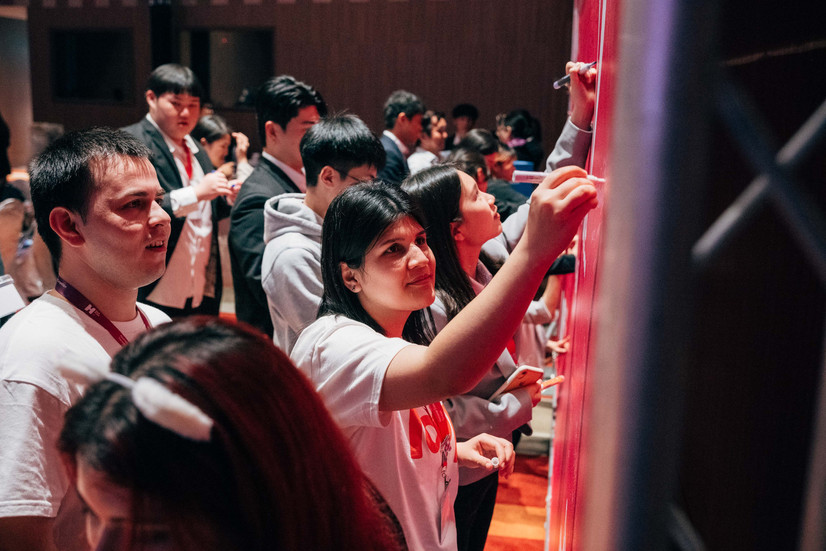


Image 7-13. Hult Prize 2025 Taiwan National Competition Events
For many, it was the first time they were told, “Your ideas matter,” and even more importantly, “You are capable of making this happen.”
And for us as organizers, that was the impact we worked for: giving young people a stage, a spotlight, and a moment of belief in themselves. It was a chance to remind students that their ideas are valid, their perspectives are valuable, and that there is a community, both local and global, willing to support them. That sense of belonging – to a cause, to a community, to a global movement was exactly what we hoped to create.
After a highly competitive pitch and feedback session, the final round featured six outstanding teams, including representatives from National Cheng Kung University (EcoFitae and FOVY), National Chengchi University (MOMentum and Aliados), and National Tsing Hua University (RenaiSun and Qingdability). Finally, the Agriculture & AgTech startup, RenaiSun, was selected as the national winner. They will represent Taiwan at the Hult Prize Digital Incubator alongside the top 50 teams worldwide.
Carrying the Ripple Forward
This year’s competition was just the beginning. As the first official Hult Prize National Competition in Taiwan, we learned a lot: not just about organizing an event, but about what it takes to create a space where students from different backgrounds can come together, share ideas, and feel seen.
We hope future organizers continue to build on what’s been started, not by repeating what we did, but by finding new ways to make the experience more meaningful, inclusive, and connected. There’s still so much room to grow: from stronger post-event engagement to deeper mentorship opportunities. Hult Prize Taiwan can be more than a competition. It can be a launchpad for ideas, collaboration, and action.
What we’re building is a ripple, something that starts with two days of connection and inspiration, but carries forward in conversations, partnerships, and personal growth long after the event ends. That ripple only exists because of the trust and support from our partners, mentors, and everyone who believed in the value of student-led organizing. With continued support, we believe this can grow into a wider ecosystem: one where young people are not only heard, but equipped to lead real change.
Let’s keep the ripple going.